
See dolphins in Lanzarote
Guide to 3 boat experiences from Puerto del Carmen: compare the sunset cruise, active dolphin searching and the daytime option with a swim stop.
Would you like to see wild dolphins, enjoy the sunset or combine both? We compare three boat experiences from Puerto del Carmen so you can choose the one that suits you best.
The 3 experiences at a glance
No awkward tables on mobile: compare duration, focus and type of experience here before opening each tour.
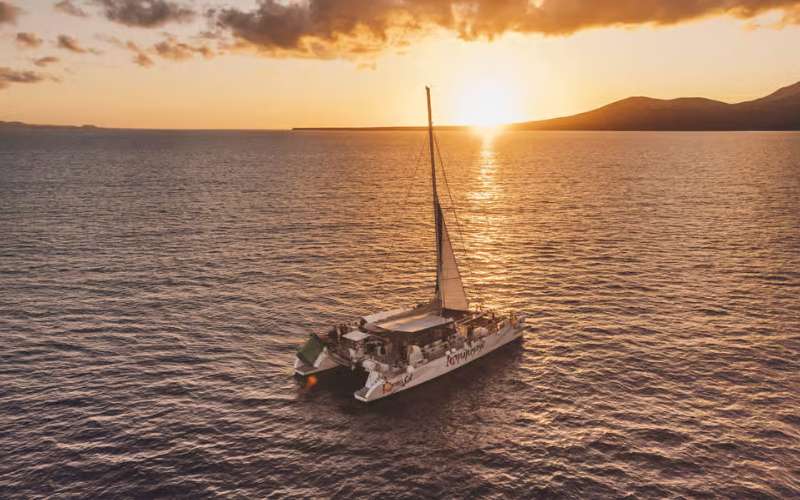 Most romantic
Dolphins at Sunset
A catamaran cruise combining the search for wild dolphins with sunset, a drink and a more relaxed atmosphere.
View details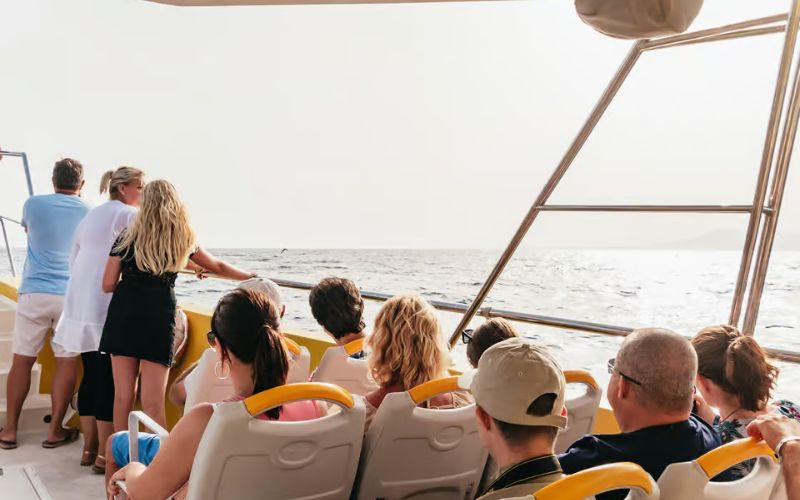 Most recommended
Sunset and Dolphins
Active dolphin searching offshore and a return during the Golden Hour.
View details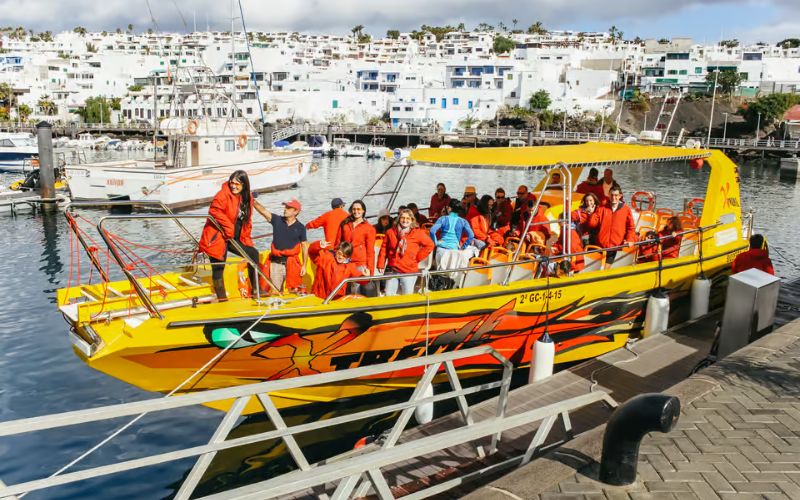 Shortest option
Mini Cruise
A daytime departure for those with less time or travelling with young children.
View detailsAll three experiences take place around wild animals in their natural environment. The crew searches for cetaceans, but no tour can guarantee a specific sighting.
The three experiences in detail
Swipe through the galleries on mobile or use the arrows on desktop. The key information and booking button stay together to make choosing easier.
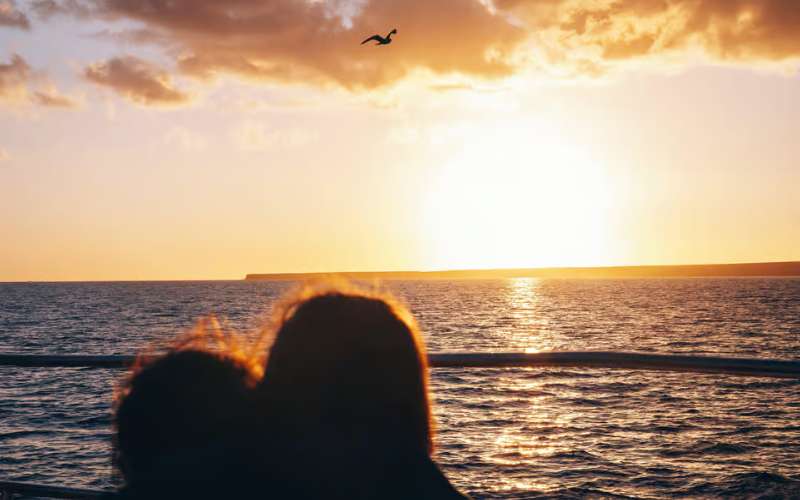


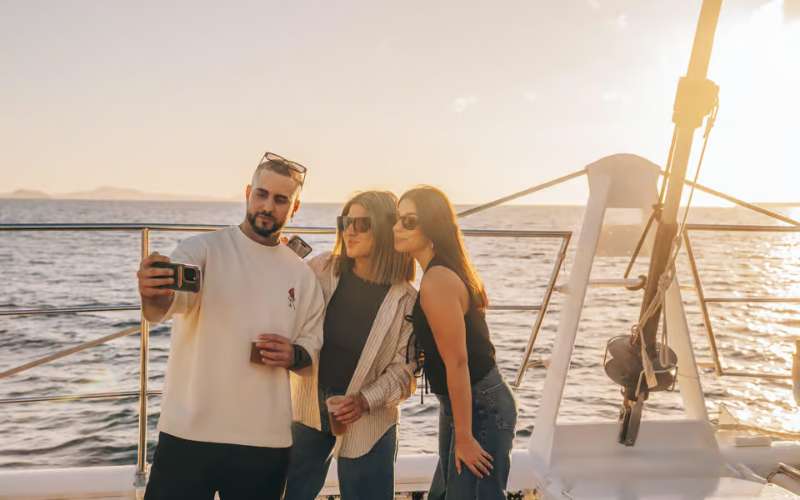
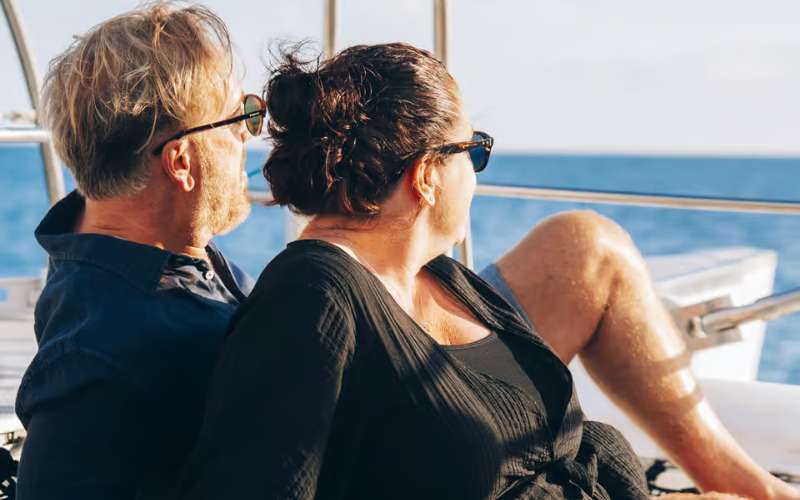
2-Hour Sunset Dolphin-Watching Cruise
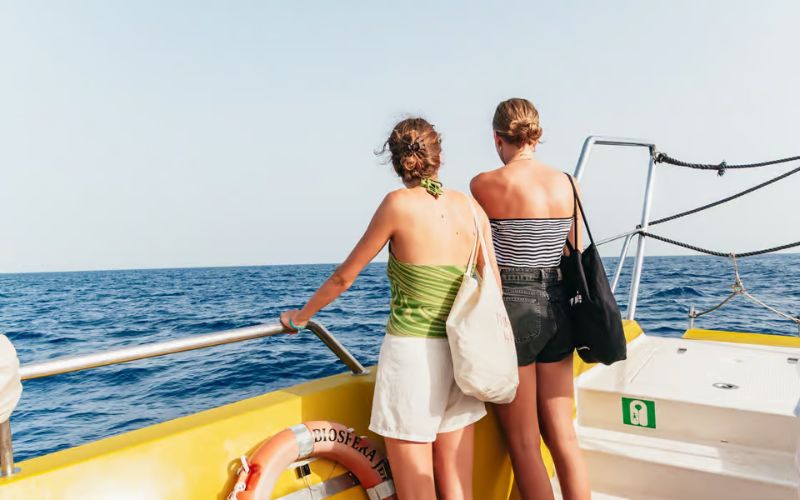
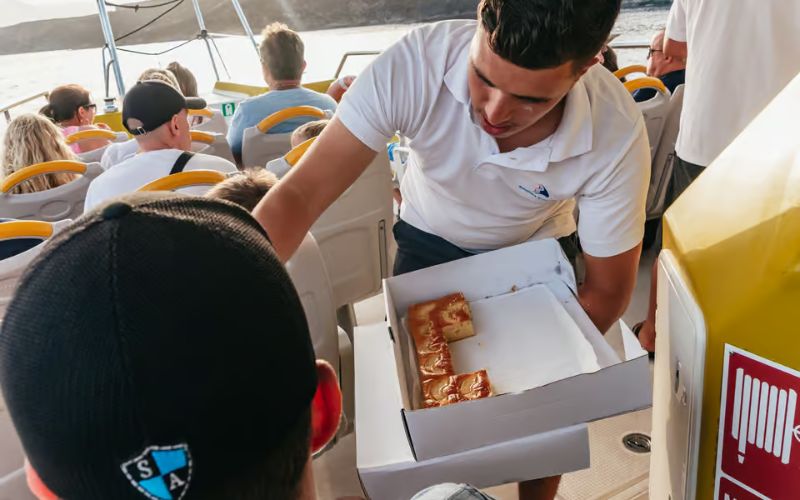
A 2-hour catamaran trip combining sunset with the search for wild dolphins off the coast of Puerto del Carmen. The cruise has a relaxed atmosphere, with a drink on board and time to enjoy the views while the crew watches for cetaceans.
Check availability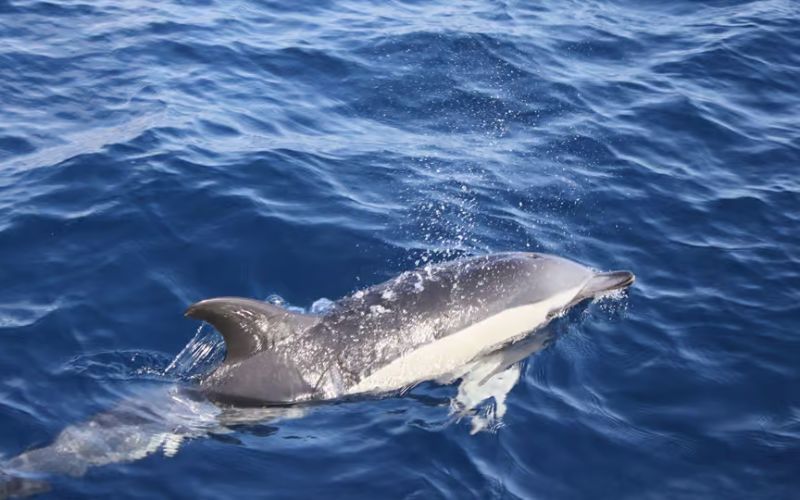
Sunset and Dolphins: The Premium Experience
Why is it the favourite? Because it combines the best of both worlds. You have 2.5 hours to find pods of dolphins offshore, and you return during the magical “Golden Hour” for spectacular photos.
Book the complete experience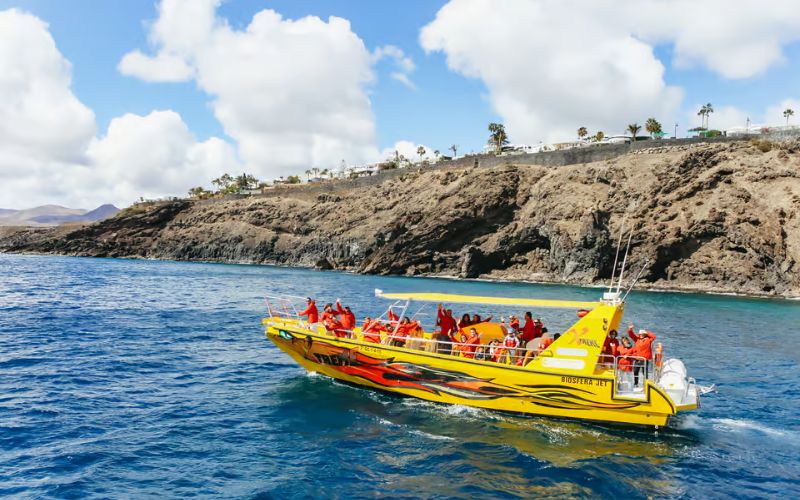
Dolphin Mini Cruise (Daytime Option)
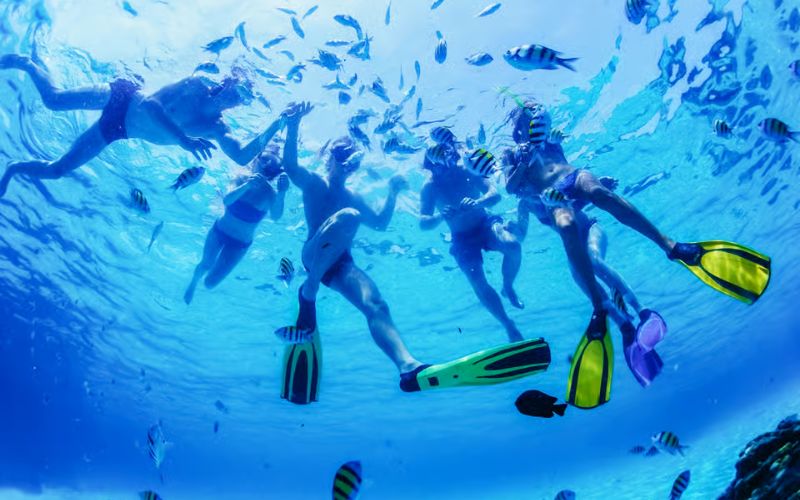
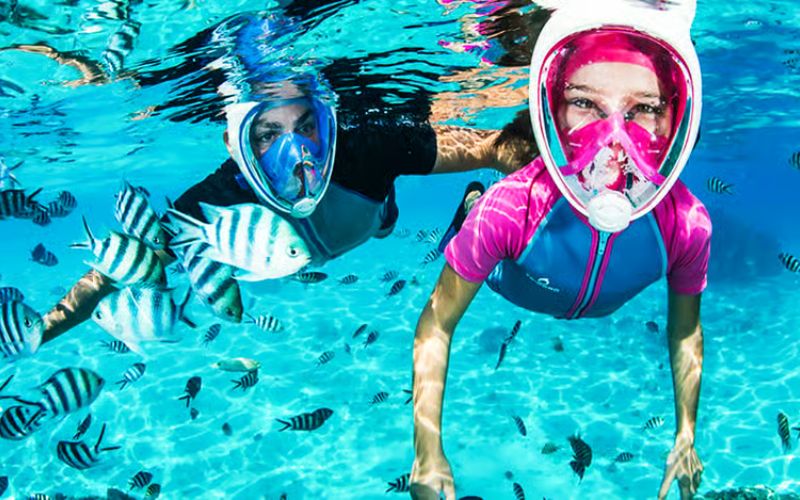
Ideal if you are travelling with young children or have a tight schedule. A dynamic daytime trip for seeing the seabed and the intense blue of the water. It is the only option that usually includes a stop for a swim.
Book the mini cruiseWhat is a dolphin-watching trip in Lanzarote like?
Unlike dolphinariums, here we are talking about wildlife in its natural habitat. The trips depart from Puerto del Carmen towards the marine corridor separating Lanzarote and Fuerteventura, a privileged area of the Atlantic. The complete experience usually lasts between 90 minutes and 2.5 hours.
Departure from the harbour
The adventure begins in Puerto del Carmen. After boarding and receiving a brief safety briefing, the boat heads out to open sea. The first few minutes are a chance to enjoy the coastline receding into the distance and feel the sea breeze.
The Active Search
This is where the active search begins. The route and pace depend on the type of boat and sea conditions. The crew uses its experience and scans the horizon for signs of activity. Part of the experience is precisely searching for wildlife in the open sea without knowing in advance where it will appear.
The Respectful Encounter
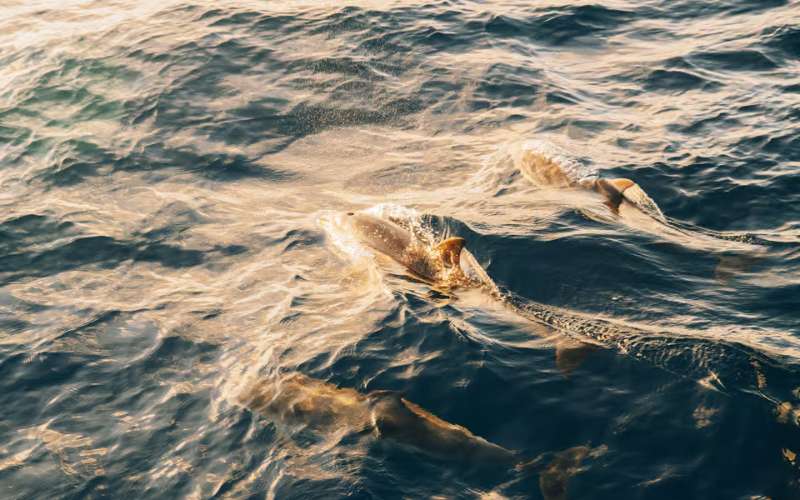
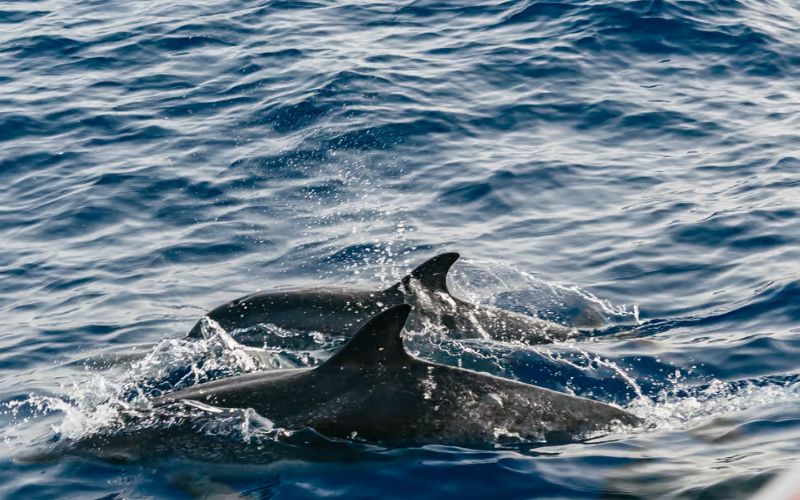
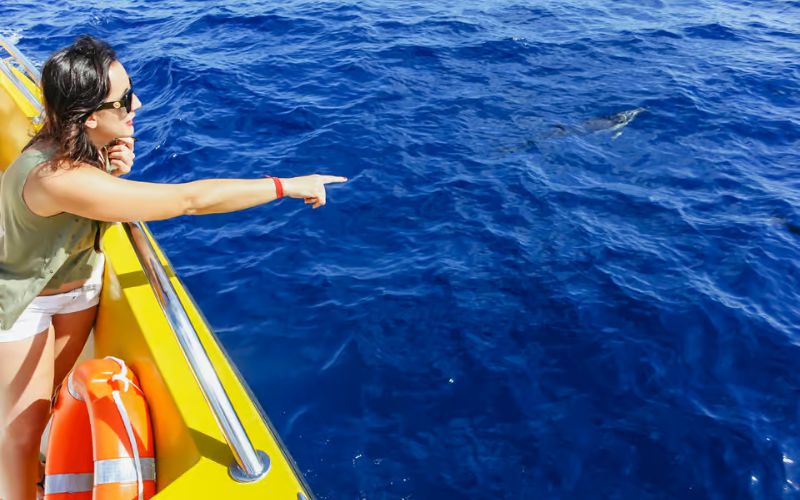
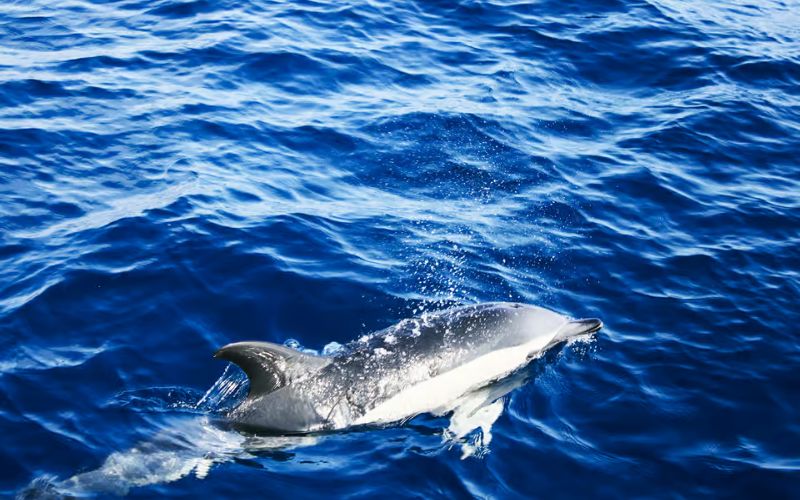
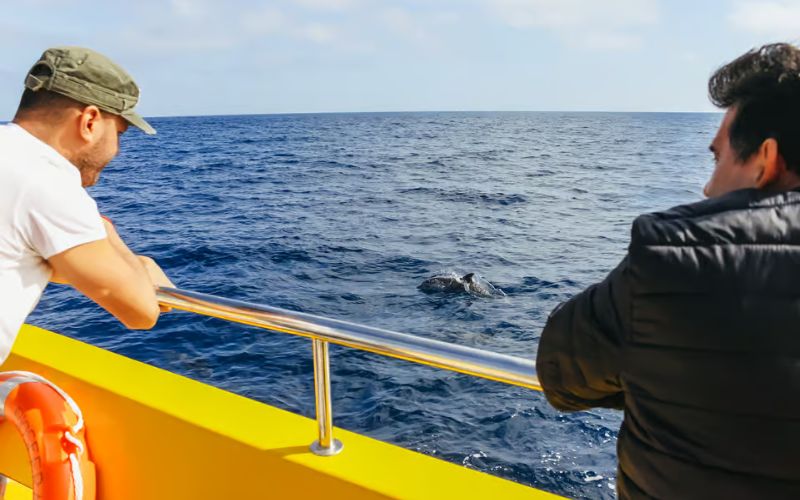
Dolphins in sight! When a group is located, the boat slows to a minimum. The engines are eased to avoid disturbing them. Often, curious dolphins approach the wake and swim alongside the hull. It is a chance to observe their behaviour in the wild.
Scenic Return
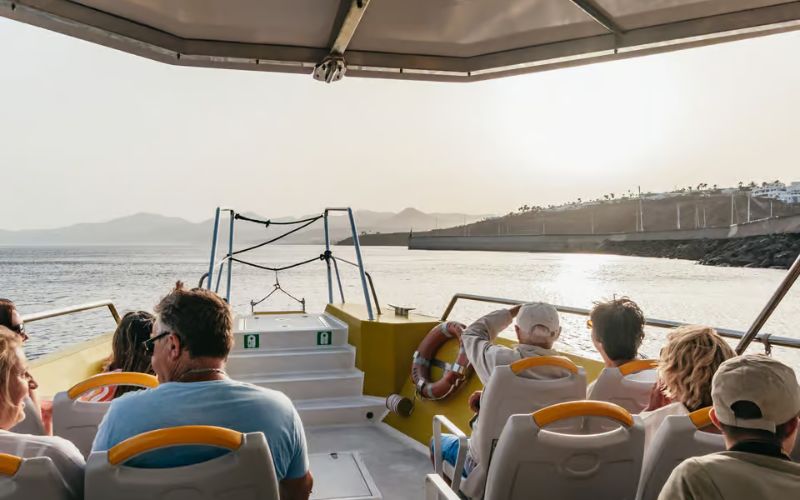
After the sighting, the boat heads back towards the coast. Depending on the time chosen, you will sail under the bright midday sun or enjoy the golden colours of sunset over the volcanoes in the south of the island. It is the perfect time to relax and look back through your photos.
What species can you see on a boat tour in Lanzarote?
The waters around Lanzarote form part of an important migratory corridor in the Atlantic. Although nature is unpredictable, these are the 4 most common species that are commonly encountered thanks to the richness of the surrounding marine environment.
 Very common
Bottlenose Dolphin
This is the famous “Flipper”. They are regular residents around the island, robust and dark grey in colour. They are often very social and curious, frequently approaching the bow of the boat to play in the waves.
 Frequent
Common Dolphin
Smaller and more streamlined than the bottlenose dolphin. It is distinguished by a characteristic yellowish patch on its sides (“hourglass”). They are extremely fast swimmers and often move in large groups.
 Resident
Short-finned Pilot Whale
Also known as pilot whales. They are large cetaceans, black in colour with a curved dorsal fin. Their behaviour is much calmer and more measured, often floating at the surface.
 Occasional
Loggerhead Turtle
It is not all about cetaceans. It is relatively common to see loggerhead turtles (Caretta caretta) resting at the water’s surface to warm in the sun and breathe before returning to deeper water.
Why is Lanzarote an ideal place to see wild dolphins?
It is no coincidence that the Canary Islands have Europe’s greatest diversity of cetaceans. The combination of geological factors and government protection measures creates an ideal ecosystem.
Biosphere Reserve
Since 1993, the whole island of Lanzarote has been a UNESCO Biosphere Reserve. This provides levels of environmental protection and water quality above those of other tourist destinations.
Source: UNESCO ↗Protected SAC area
The marine area off Puerto del Carmen forms part of the “Natura 2000 Network”. These are Special Areas of Conservation (SACs) designated by the EU to protect vital habitats.
Source: Government of the Canary Islands ↗Abyssal Depth
The island’s volcanic origin means the seabed drops to great depths (up to 2,000 m) very close to the coast. This allows open-ocean species to come close to the beaches.
Atlantic Corridor
Lanzarote and Fuerteventura create a natural channel rich in nutrients. This “corridor” is a vital highway for the migration of large cetaceans and a feeding area.
Cetacean watching in Spain is strictly regulated to protect the animals. Always make sure you sail on authorised boats displaying this flag, awarded by the Ministry for Ecological Transition, which guarantees respectful and sustainable navigation.
View official regulations ↗Tips for a perfect dolphin-watching trip
So that your only concern is enjoying the experience, here are 4 key recommendations before boarding.
Avoid seasickness
The Atlantic can be choppy. If you are prone to seasickness, do not take the risk: take a Biodramina tablet (with caffeine if it is daytime) 30 minutes before departure. Once you are on the boat, it is too late.
The wind can be deceptive
Even if it is warm on the beach, the perceived temperature drops offshore because of the speed of the boat and the wind. Always bring a light jacket or windbreaker, especially on sunset trips.
Sun Protection x2
The sea acts like a mirror, reflecting UV rays. The sun burns twice as quickly on the boat. Use high-factor sunscreen, polarised sunglasses and a cap (hold onto it tightly!).
Prepare your camera
Dolphins are fast and unpredictable. Set your phone or camera to “Burst Mode” and use a fast shutter speed. If you record video, shoot horizontally and hold the phone with both hands.
Choose the experience that suits you
Sunset and relaxation, active searching with Golden Hour, or a shorter daytime trip with a swim.